For beverage and co-pack operations purchasing 25+ truckloads of corrugated trays annually.
WHY MOST BEVERAGE FACILITIES NEVER REVISIT THEIR TRAY SPEC
Most beverage tray specifications were adopted from a supplier catalog years ago and never questioned. The result is over-specified material, wasted freight capacity, and hidden cost.
Excess Freight Spend
B-Flute trays waste 25% of truck capacity compared to optimized D-Flute configurations.
Low Pallet Density
Standard B-Flute trays yield fewer trays per pallet, increasing handling and warehouse cost.
Over-Specified Material
Many facilities run thicker board than needed, paying for strength they do not require.
No Engineering Review
Tray specs were inherited from a catalog, not engineered for your specific product and pallet configuration.
BEFORE/AFTER COMPARISON
Typical High-Volume Tray Conversion
Engineering tray optimization increases pallet density by 34% and reduces annual freight by 20-30%.
+34%
More Trays Per Pallet
25%
Fewer Truckloads
20-30%
Freight Cost Reduction
Metric
B-Flute (Before)
D-Flute (After)
Impact
Board Thickness
1/8 inch
3/32 inch
Thinner, lighter
Trays Per Pallet
1,500
2,000
+34%
Trays Per Truckload
78,000
104,000
+33%
Truckloads Per Year
84
63
-25%
Annual Freight Impact
Baseline
Optimized
20-30% reduction
Running 25+ Truckloads of B-Flute Trays Annually?
Request a free tray optimization analysis. We will model your specific SKU configuration and show you the freight and pallet impact before you change a single tray.
Beyond Freight Savings: How D-Flute Tray Optimization Improves Your Entire Operation
Warehouse Space
Higher pallet density means fewer pallets in storage, freeing floor space for production.
Labor Reduction
Fewer truckloads means fewer unloads, less receiving labor, and reduced forklift hours.
Sustainability
Less material per tray, fewer trucks on the road, and lower carbon footprint per unit shipped.
Total Cost Reduction
Freight, material, labor, and storage savings compound into significant annual cost reduction.
BEVERAGE FORMAT APPLICATIONS
D-Flute Optimization Applies Across Beverage Categories
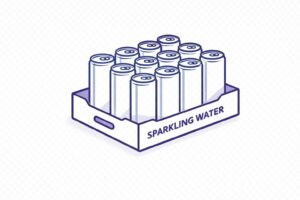
Sparkling Water
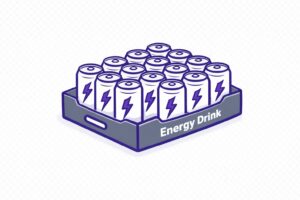
Energy Drinks
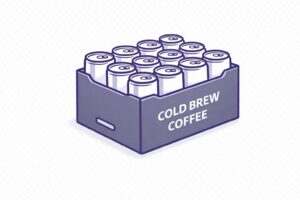
Cold Brew Coffee
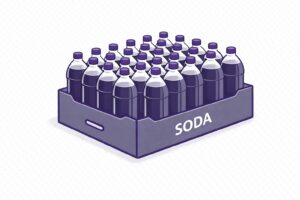
Soda
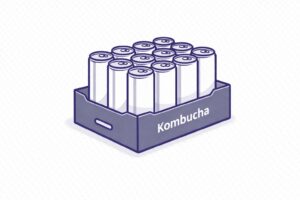
Kombucha
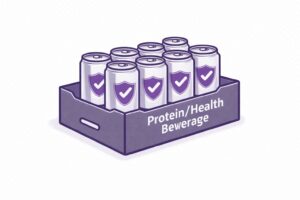
Protein Drinks
CASE STUDY
Regional Beverage Co-Packer: B-Flute to D-Flute Conversion
BEFORE
B-Flute corrugated trays
1500 trays per pallet
130 truckloads per year
Higher per-unit freight cost
More warehouse pallet positions
AFTER
D-Flute corrugated trays
2000 trays per pallet (+34%)
98 truckloads per year (-25%)
20-30% freight cost reduction
Fewer pallet positions needed
Result: 20 fewer truckloads annually, estimated $120,000+ in freight savings, with no change to product protection or retail shelf performance.
Frequently Asked Questions
Will D-Flute trays protect my product as well as B-Flute?
Yes. D-Flute provides equivalent stacking strength for beverage applications. We run compression testing on every conversion to verify performance before production.
How long does the conversion process take?
Typical timeline is 4-6 weeks from initial analysis to first production run. We handle the engineering, testing, and transition planning.
What if my retailer requires specific tray specs?
We work within retailer specifications. Many retailers have already approved D-Flute for beverage trays. We can provide test data to support approval where needed.
What volume makes this worth doing?
Operations purchasing 25+ truckloads of corrugated trays per year will see meaningful freight savings. Higher volumes amplify the impact.
RELATED SOLUTIONS
More Ways to Reduce Packaging Cost
Vendor Consolidation
Reduce supplier count and simplify procurement with a single-source packaging partner.
Most high-volume beverage operations have $100K+ in hidden freight waste from over-specified corrugated trays. Our free analysis quantifies it and shows you the path to eliminating it.